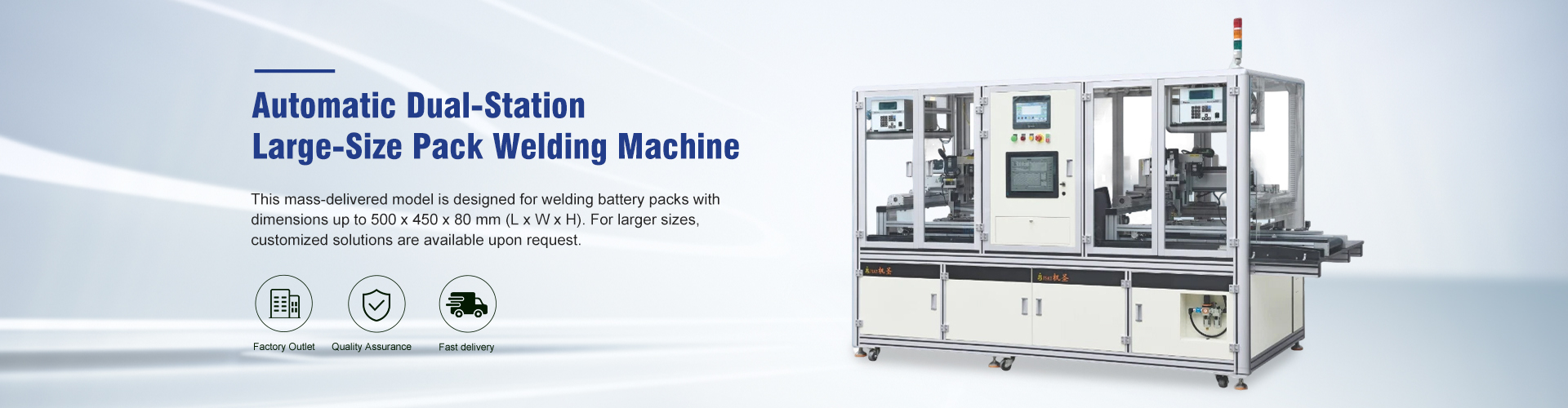
Amid the accelerating global transition toward renewable energy and electrification, the lithium battery industry has evolved from a phase of rapid expansion into one defined by precision manufacturing, high consistency, and scalable efficiency. From energy storage systems and power tools to electric two-wheelers, electric vehicles, and smart devices, the demand for battery pack safety, stability, and long-term performance continues to rise.
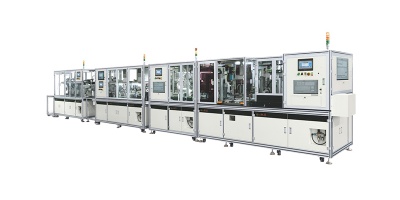
Traditional production models—reliant on labor-intensive processes and semi-automated equipment—are increasingly unable to meet the industry’s stringent standards for efficiency, consistency, and cost control. In this context, the JSAT Fully Automatic Lithium Battery Pack Assembly Line JS-1 emerges not merely as an automation upgrade, but as a comprehensive intelligent manufacturing solution designed to redefine the boundaries of quality and productivity in battery pack production.
By integrating the entire assembly process into a unified, data-driven system, JSAT establishes a truly robust quality defense line for lithium battery manufacturers worldwide.
I. The Inevitable Shift: From Labor-Intensive Manufacturing to Intelligent Automation
(1)Entering the Era of High Consistency
As energy density increases and application scenarios diversify, battery pack consistency has become a decisive factor in determining overall product performance and safety. Even minor deviations in cell voltage or internal resistance can be amplified once assembled into a pack, directly impacting lifespan, reliability, and safety.
Therefore, critical processes such as cell sorting, welding precision, BMS installation, and structural assembly must operate under strict standardization and full traceability. Partial automation is no longer sufficient. What manufacturers require today is a fully integrated, end-to-end automated production line governed by centralized data and coordinated control logic.
The JSAT JS-1 system answers this demand with a holistic approach that unifies production, quality management, and process optimization into a seamless workflow.
(2)Addressing Rising Labor Costs and Capacity Pressure
Beyond technical demands, manufacturers face increasing labor costs and workforce management challenges. Conventional assembly lines may require more than 40 operators, leading to complex coordination, extensive training, and inconsistent output dependent on human experience.
Through advanced automation and intelligent coordination, the JSAT JS-1 dramatically reduces labor requirements by 50–90%. Operator numbers can decrease from over 40 to just 1–3 personnel—or even achieve fully unmanned operation. This transformation not only lowers operational costs but also enhances production resilience in fluctuating market environments.
II. System Architecture: A Fully Integrated 11-Stage Production Process
Unlike fragmented automation setups, the JSAT JS-1 is engineered as a complete production ecosystem. It covers 11 critical stages, forming a closed-loop manufacturing structure that ensures precision, traceability, and efficiency at every step.
(1)Automatic Cell Feeding
The intelligent feeding system automatically positions and aligns battery cells with high precision. By minimizing human handling, it reduces contamination risks and ensures a stable starting point for downstream processes.
High-precision testing modules measure cell voltage and internal resistance, automatically classifying and matching cells for optimal grouping. This stage plays a pivotal role in ensuring pack-level consistency and long-term performance.
(3)Cell Insertion into Holders or Brackets
The automated insertion mechanism accurately embeds matched cells into holders or structural brackets, maintaining consistent spacing and structural integrity for subsequent assembly steps.
(4)Nickel Strip (Busbar) Installation
Nickel strips or busbars are automatically positioned and aligned using vision-assisted systems. This prevents misalignment and reduces the risk of weak connections or short circuits.
(5)Welding (Resistance or Laser)
Depending on application requirements, the system supports either resistance welding or laser welding. Both methods ensure strong, stable connections with minimal thermal impact. All welding parameters are monitored and recorded in real time, creating a traceable data archive.
(6)BMS PCB Installation
The Battery Management System (BMS) PCB is automatically installed with precise alignment to guarantee reliable electronic control and monitoring functionality.
(7)PCB Soldering
Automated soldering ensures consistent electrical connections and reduces variability caused by manual processes.
(8)Pack Enclosure Assembly
The outer housing of the battery pack is assembled automatically, ensuring mechanical stability and protective integrity.
(9)Screw Locking
Automated screw fastening guarantees uniform torque and structural reliability across all units.
(10)End-of-Line (EOL) Testing
Comprehensive functional, safety, and performance testing is conducted at the end of the line. All data are recorded and linked to product identification codes, enabling full traceability.
(11)Automatic Unloading
Qualified battery packs are automatically unloaded and transferred to packaging or storage, completing a truly closed-loop automated production cycle.
III. Efficiency Breakthrough: Transforming Productivity and Deployment Speed
(1)Significant Capacity Enhancement
Through optimized cycle timing and parallel process design, the JSAT JS-1 increases production capacity by 30–60%, with certain models achieving up to 200% productivity growth.
For example, the 5S1P battery pack model can reach an output of up to 450 packs per hour. In high-volume manufacturing scenarios, this level of productivity directly strengthens a company’s delivery capabilities and competitive positioning.
(2)Rapid Deployment in 6–12 Days
Traditional production line installations often require weeks before reaching stable mass production. The modular design and standardized commissioning process of the JSAT JS-1 enable manufacturers to transition from installation to full-scale production within just 6–12 days after on-site setup, significantly accelerating return on investment.
IV. Quality Assurance: Data-Driven Control Across the Entire Process
(1)Real-Time Data Monitoring
Each critical process stage integrates real-time data collection and monitoring systems. Key parameters—including voltage, internal resistance, welding current, and temperature—are centrally managed through an intelligent control platform. This ensures process stability and provides valuable insights for continuous optimization.
(2)High Consistency and Reduced Defect Rates
By minimizing human intervention and standardizing operational logic, the JSAT JS-1 significantly lowers defect rates. Instead of relying on operator experience, production quality is governed by algorithms, precision control systems, and data validation.
V. Long-Term Value: Sustainable Performance and Upgrade Flexibility
(1)Continuous Product and Process Upgrades
JSAT supports ongoing product upgrades and process innovation, ensuring that the production line remains adaptable to evolving battery designs and market demands. Modular configurations and software updates allow flexible expansion and model changes.
(2)Reliable Service and Over 10 Years of Stable Operation
With expert after-sales support, remote diagnostics, and continuous technical assistance, the JSAT JS-1 is engineered for more than 10 years of stable operation. This long-term reliability transforms the assembly line from a capital expense into a strategic asset.
VI. A Strategic Manufacturing Asset for Future Competitiveness
In today’s increasingly competitive lithium battery market, manufacturing capability defines brand strength. The JSAT Fully Automatic Lithium Battery Pack Assembly Line JS-1 does more than reduce costs and increase efficiency—it establishes a comprehensive quality control system that safeguards product reliability and reinforces long-term brand credibility.
Full automation is not merely a technological label; it is a commitment to uncompromising quality. In the name of full automation, JSAT builds a solid defense line for lithium battery manufacturing—where efficiency, stability, and safety converge into a unified production philosophy.
Choosing JSAT JS-1 means choosing not just an assembly line, but a forward-looking intelligent manufacturing solution designed for the future of energy.