What technological advantages does a fully automatic lithium battery pack assembly line offer in ensuring consistency and stability?
Publish Time: 2026-03-18
As a crucial piece of equipment in the new energy manufacturing field, the fully automatic lithium battery pack assembly line demonstrates significant advantages in ensuring product consistency and operational stability through highly integrated automation and intelligent technologies. This is especially true for products like battery packs, which have extremely high requirements for performance matching and safety; every detail of the assembly process directly impacts the final quality.
1. Standardized Process Control: Ensuring Stable and Controllable Steps
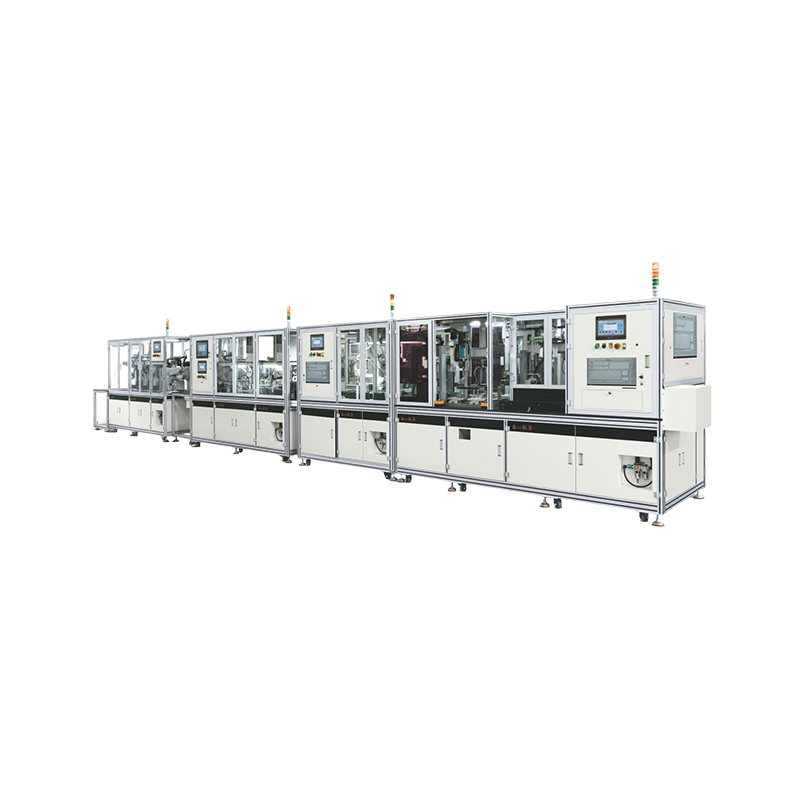
The fully automatic assembly line uses programmed control to break down the production process into multiple standard steps, effectively reducing fluctuations caused by human intervention. The entire solution covers 11 key steps, from automatic feeding to cell sorting, cell insertion into the support structure, and subsequent welding and assembly; each process is precisely executed by the system. The equipment operates according to preset parameters, avoiding deviations that may occur during manual operation, thus ensuring product consistency from the source.
2. Cell Sorting and Matching: The Core Foundation for Consistency
In lithium battery packs, the consistency of the cells directly determines the overall performance. An automated sorting system that matches voltage and internal resistance allows for the combination of cells with similar performance, avoiding the instability caused by "strong-weak" pairings. This step utilizes high-precision detection equipment and algorithms for rapid and accurate classification, laying a solid foundation for subsequent assembly and serving as a key step in ensuring battery pack consistency.
3. High-Precision Assembly and Welding: Enhancing Structural Stability
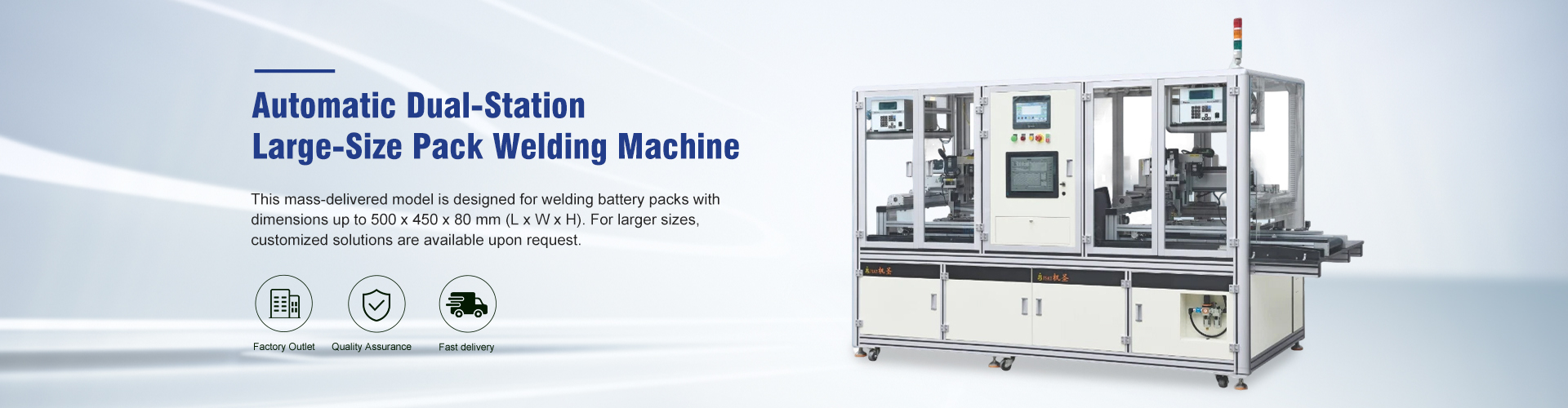
In the cell insertion bracket, nickel strip installation, and welding processes, automated equipment achieves highly repeatable operations. For example, during resistance welding or laser welding, the system precisely controls the welding position, energy, and time, ensuring consistent quality at each weld point. This not only improves conductivity but also enhances the reliability of the connection structure, reducing the risks of poor or over-welded connections, thereby improving overall stability.
4. Integrated Electronic Assembly: Ensuring Consistent System Operation
In the BMS PCB installation and PCB welding processes, automated equipment achieves high-quality assembly of electronic components through precise positioning and program control. As the "brain" of the battery pack, the installation accuracy and welding quality of the BMS directly affect the stability of the battery management function. Automated operation ensures consistent assembly standards for each PCB, improving the consistency and safety of the entire battery pack during charging and discharging.
5. Assembly and Inspection: Achieving Closed-Loop Quality Control
During battery pack casing assembly and screw tightening, automated equipment uses a torque control system to ensure consistent tightening force, preventing structural problems caused by excessive tightness or looseness. Subsequently, end-of-line (EOL) testing comprehensively inspects the finished product, including key indicators such as electrical performance and safety. This closed-loop inspection mechanism allows for the timely detection and rejection of defective products, further improving overall consistency.
6. Automated Unloading and Continuous Production: Ensuring Long-Term Stable Operation
After completing all processes, the automated unloading system outputs the finished products in an orderly manner, freeing up space for the next batch of production. The entire process operates continuously, reducing human handling and intervention, improving efficiency, and reducing instability caused by improper operation. The equipment maintains a stable cycle time even during long-term operation, ensuring the consistency of the entire production line output.
The fully automated lithium battery pack assembly line achieves precise control over the entire process from raw materials to finished products by covering 11 key steps, including automated feeding, cell sorting, cell insertion into brackets, nickel strip installation, welding, BMS installation, PCB welding, battery pack casing assembly, screw locking, EOL testing, and automated unloading. This highly integrated and intelligent production method not only significantly improves product consistency but also provides a solid guarantee for the long-term stable operation of the system, becoming an indispensable and important support for modern battery manufacturing.