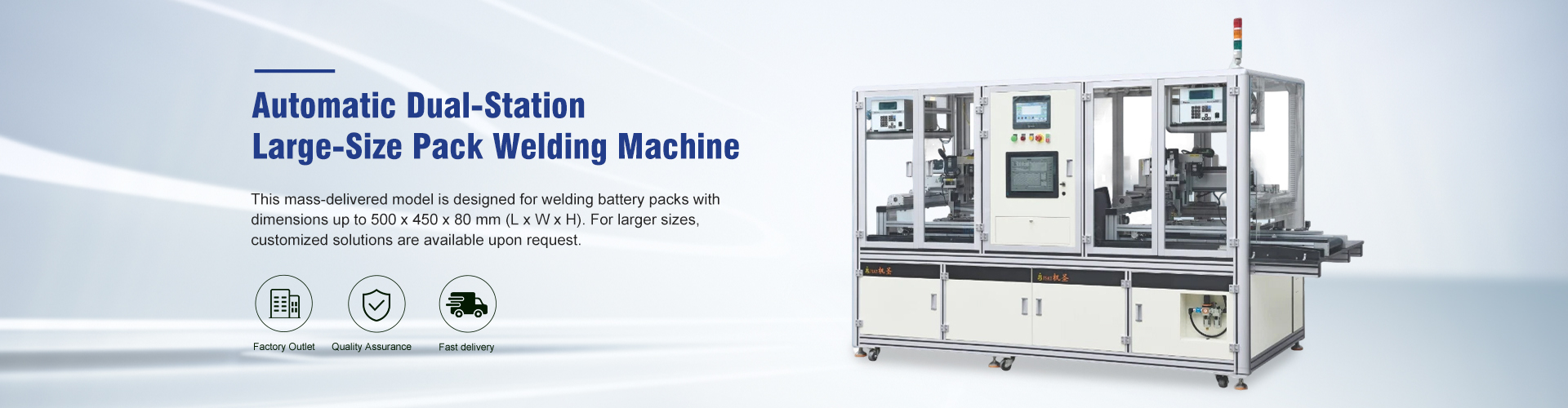
In the production process of power tool battery packs, the labeling process, as a crucial step in displaying product information and brand identification, has a significant impact on product quality and production efficiency. Faced with increasing production demands and increasingly stringent labeling standards, traditional labeling methods have gradually revealed their shortcomings.
Jisheng's independently developed non-standard customized automatic labeling machine, utilizing a six-axis robot configuration and vision alignment technology, provides a revolutionary solution for power tool battery pack production, opening a new chapter in efficient and precise labeling.
1. Limitations of Traditional Labeling Methods
In the past, labeling of power tool battery packs mainly relied on manual operation or relatively simple semi-automatic labeling equipment. While manual labeling offers some flexibility, its drawbacks are also obvious. On the one hand, manual operation is limited by human physiological functions, making it difficult to significantly increase labeling speed; on the other hand, under the demands of large-scale production, labor costs have risen sharply, and long hours of repetitive work can easily lead to worker fatigue, thereby reducing labeling efficiency. Furthermore, the accuracy of manual labeling depends entirely on the operator's experience and current condition. Differences exist between different operators in label placement, flatness, etc., making it difficult to guarantee the consistency of product labeling. Frequent issues such as label misalignment and air bubbles severely impact product appearance quality and brand image.
While semi-automatic labeling equipment improves labeling speed to some extent, it lacks flexibility when dealing with battery packs of varying sizes and shapes, and complex labeling requirements. Equipment adjustments are time-consuming and labor-intensive, and positioning accuracy is easily affected by mechanical wear and vibration. After long-term operation, labeling accuracy is difficult to maintain stability, failing to meet the demands of power tool battery pack manufacturers for high-quality, high-efficiency production.
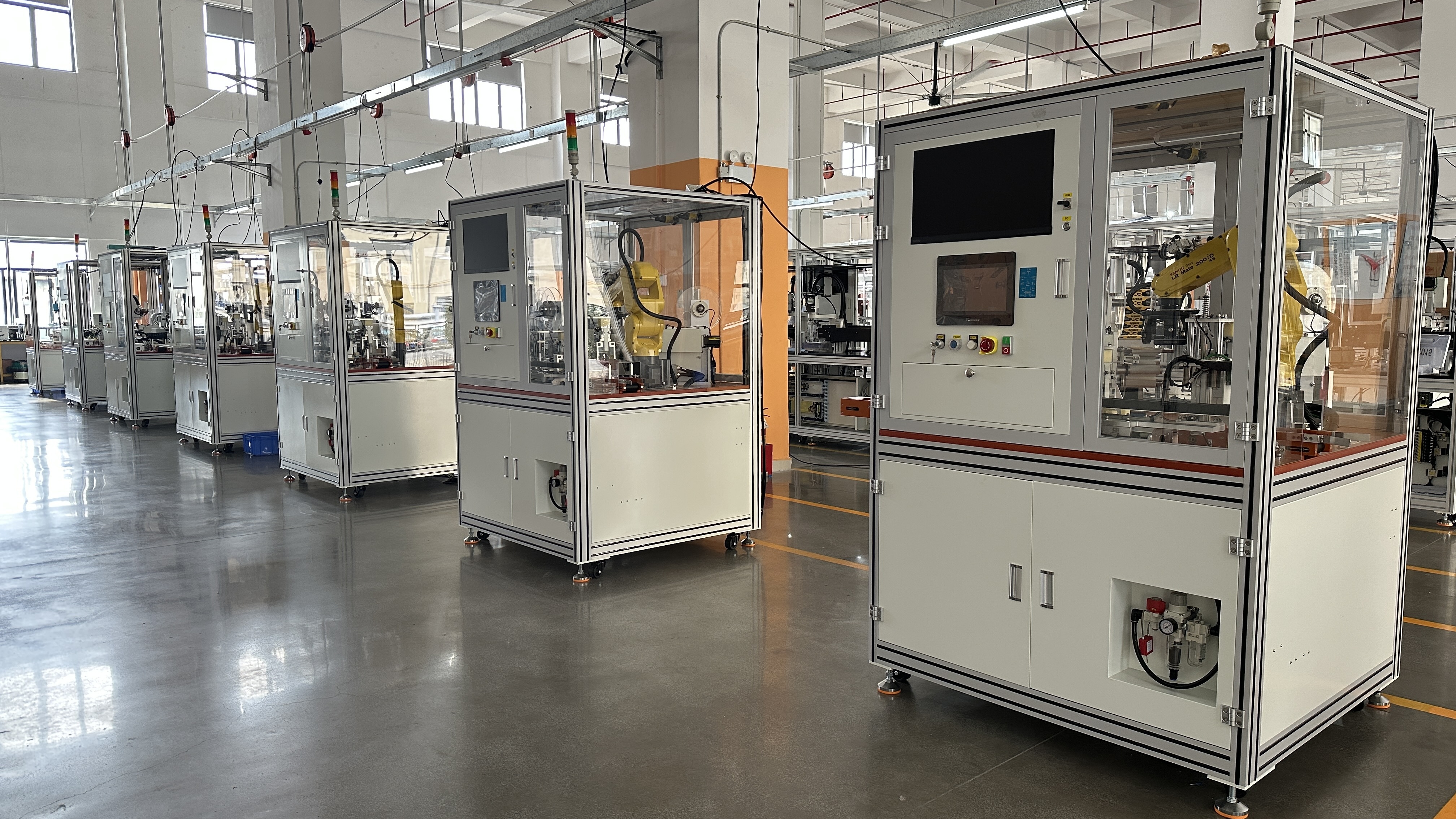
II. Technical Components of a Six-Axis Robotic Automatic Labeling Machine
(1) Core Six-Axis Robot
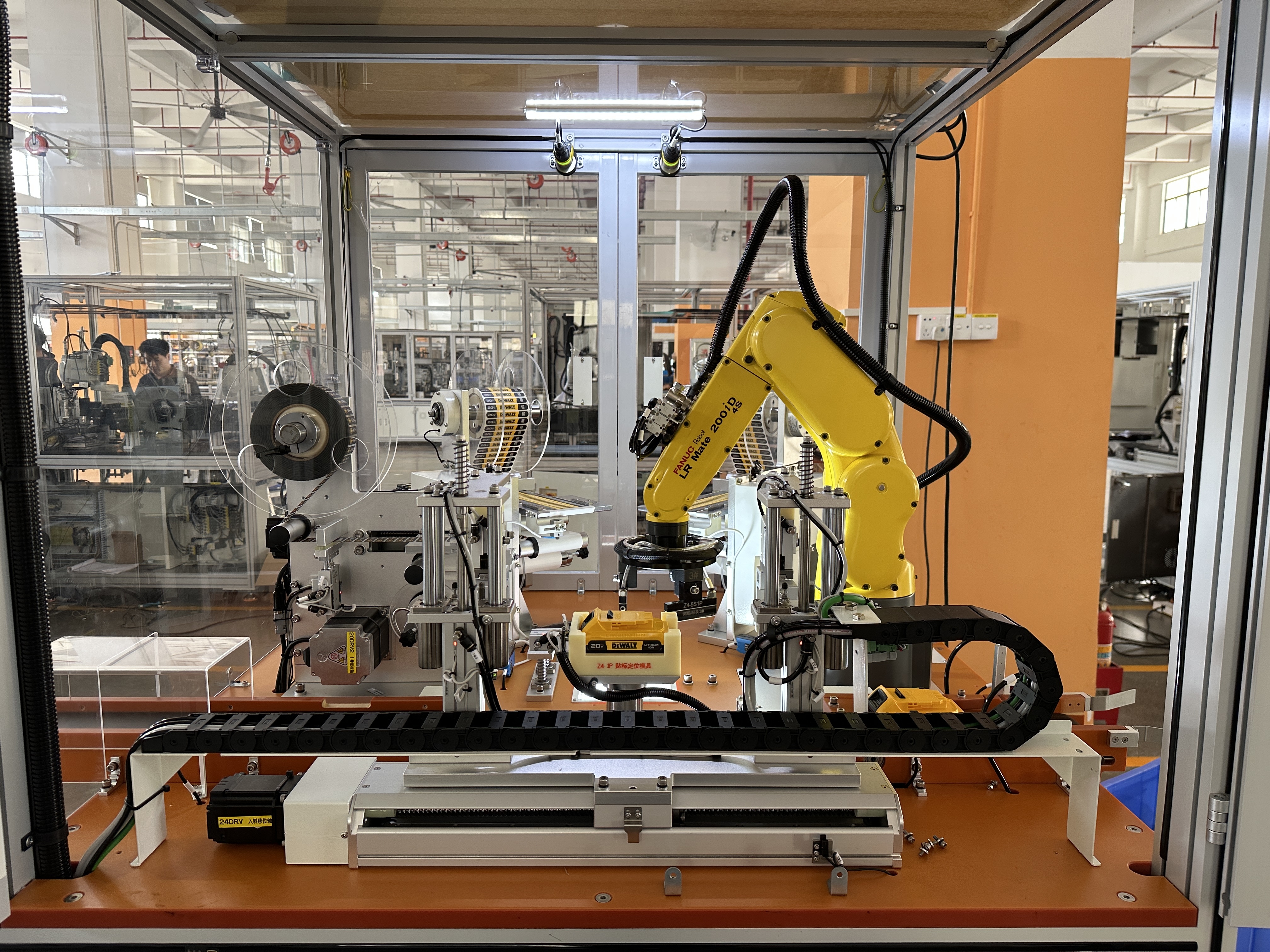
The six-axis robot is the main actuator of the labeling machine. Its six joint axes give the robot highly flexible motion capabilities, allowing it to freely extend, rotate, and position itself in three-dimensional space like a human arm. Each joint axis is driven by a high-precision servo motor, possessing powerful torque output and precise position control capabilities. Through advanced motion control algorithms, the robot can quickly plan and execute complex labeling trajectories, from picking up labels and transferring them to precisely placing them on the designated positions on the battery pack—a smooth and accurate process. For example, when faced with irregularly shaped battery packs, the six-axis robot can flexibly adjust its posture to ensure the label conforms to the surface curvature of the battery pack, achieving perfect labeling.
(2) Precise Vision Alignment System
The vision alignment system acts as the "eyes" of the labeling machine, providing real-time, precise positional information for the labeling process. This system mainly consists of a high-resolution industrial camera, a light source, and image processing software. The industrial camera is mounted on the robot arm or fixed in an appropriate position, enabling it to clearly capture images of the area to be labeled on the battery pack and the label. The light source optimizes lighting conditions, enhances the contrast of image features, and makes it easier for the camera to acquire more accurate image information.
The image processing software employs advanced image recognition algorithms to quickly analyze and process the images captured by the camera. It can accurately identify the outline of the battery pack, locate feature points, and determine the position and angle of the label. It calculates the relative positional deviation between the label and the battery pack and feeds this information back to the six-axis robot's control system in real time. Based on this feedback, the robot quickly adjusts its trajectory to achieve precise alignment between the label and the battery pack, thereby ensuring that the labeling position error is controlled within a very small range.
III. Workflow of the Six-Axis Robotic Automatic Labeling Machine
(1) Battery Pack Transportation and Positioning
Power tool battery packs are precisely transported to the labeling machine's working area via an automated conveyor line. A dedicated positioning device is installed on the conveyor line, combining mechanical positioning and sensor detection technology to ensure that each battery pack arrives at the labeling position with a consistent posture and precise location, laying the foundation for subsequent visual alignment and labeling operations. For example, a photoelectric sensor detects the edge position of the battery pack, triggering a positioning cylinder to precisely fix the battery pack in a preset position, thus ensuring consistent battery pack images captured by the camera.
(2) Label Pickup and Visual Inspection
At the label supply unit, rolls of labels are smoothly transported to the label pickup position via an unwinding mechanism and a tension control system. The six-axis robot quickly moves to the label pickup point based on the initial position information fed back by the vision system and precisely picks up the label using a vacuum suction cup or a dedicated pickup device installed on the robot's end effector. After picking up the label, the robot moves to the visual inspection area, where the camera re-images the picked-up label to confirm whether it was picked up correctly and whether there are any wrinkles or damage. If a defective label is detected, the system will automatically issue an alarm and control the robot to discard the defective label and pick up a new one to ensure the quality of the labels used for application.
(3) Vision Alignment and Labeling Execution
After label picking and inspection, the six-axis robot delivers the label to the top of the battery pack. At this time, the vision system restarts, and the industrial camera simultaneously captures images of the battery pack labeling area and the label. The image processing software quickly calculates the positional deviation between the two. The robot control system adjusts the motion parameters of each joint axis of the robot in real time based on the calculation results, precisely controlling the posture and position of the robot arm to achieve precise alignment between the label and the battery pack labeling area. When the positional deviation meets the labeling accuracy requirements, the robot slowly lowers its arm, smoothly attaching the label to the surface of the battery pack, and uses a rolling device to moderately roll and press the label to ensure that the label adheres tightly to the surface of the battery pack without bubbles or wrinkles.
(4) Label Quality Inspection and Shipping
After the label is applied, the vision system performs a final inspection of the label quality. The camera takes a photo of the labeled battery pack, and the software analyzes whether the label position is accurate, whether the pasting is flat, and whether there are any missing or curled edges. The test results are fed back to the control system in real time. Battery packs with qualified labels enter the next production stage via conveyor belt; battery packs with unqualified labels enter the next production stage via conveyor belt; battery packs with unqualified labels are marked by the system and sent to the repair area for manual or special equipment processing.
IV. Significant Advantages of the Six-Axis Robot Automatic Labeling Machine
(1) Fast and Efficient Labeling Speed
With its high-speed motion performance and precise motion control, the six-axis robot can complete a series of actions such as label picking, transfer, and application in a short time. Compared with manual labeling and traditional semi-automatic labeling equipment, its labeling speed is significantly improved. In the large-scale production of power tool battery packs, it can significantly shorten the production cycle, improve production efficiency, and meet the growing production capacity needs of enterprises. For example, after a power tool battery pack production line adopted the six-axis robot automatic labeling machine, the labeling efficiency increased several times, and the number of labels applied per hour increased from hundreds to thousands, effectively alleviating the production bottleneck problem.
(2) Unparalleled Labeling Accuracy
The application of vision alignment technology has achieved unprecedented labeling accuracy. By performing real-time visual inspection and precise position calculation on the battery pack and labels, the six-axis robot can accurately affix labels to designated positions on the battery pack, with positional errors controlled within a very small range, typically ±0.1mm or even higher. This ensures the consistency and accuracy of labeling positions for each battery pack, greatly enhancing the product's appearance quality and brand image. In the production of high-end power tool battery packs where labeling accuracy is extremely high, the high precision advantage of the six-axis robot automatic labeling machine is particularly prominent, effectively reducing the product defect rate caused by labeling errors.
(3) Strong Flexibility and Adaptability
The multi-joint structure and programmable nature of the six-axis robot allow it to easily adapt to the labeling needs of power tool battery packs of different sizes and shapes. Through simple programming adjustments, the robot can quickly switch labeling modes to meet the needs of diverse product production. Simultaneously, the vision alignment system can identify changes in battery pack characteristics in real time and automatically adjust labeling parameters, ensuring accurate labeling under different working conditions. For example, when the battery pack size changes, the vision system can quickly identify the new contours and positioning feature points. The robot adjusts the labeling trajectory according to the new position information, eliminating the need for complex mechanical adjustments to the equipment and greatly improving the equipment's versatility and production flexibility.
(4) Stable and reliable operating performance
The labeling machine has a compact and reasonable overall structure. Key components are made of high-quality materials and advanced manufacturing processes to ensure stable and reliable performance under long-term high-intensity operation. This six-axis robot has undergone rigorous quality inspection and optimized design, featuring high rigidity and low vibration, and can withstand frequent start-stop cycles and high-speed motion impacts. The vision alignment system uses industrial-grade hardware and mature image processing algorithms, possessing strong anti-interference capabilities and stable operation in complex production environments, ensuring the continuity and stability of the labeling process and effectively reducing equipment failure rates and maintenance costs.
V. Summary and Outlook
The six-axis robot automatic labeling machine, with its advantages of high speed, high efficiency, high labeling accuracy, strong adaptability, and high reliability, has become an ideal solution for labeling processes in the production of power tool battery packs. It not only effectively overcomes the limitations of traditional labeling methods, improving production efficiency and product quality, but also brings significant economic benefits and market competitiveness to enterprises. Adhering to the mission of reducing costs, improving efficiency, and ensuring customer quality, the six-axis robotic automatic labeling machine is expected to achieve higher labeling speeds and precision in the future, further expanding its application areas and scope. At the same time, the equipment will become more intelligent and user-friendly, better integrating with the overall production system of enterprises, injecting new vitality and momentum into the intelligent upgrading and sustainable development of the power tool battery pack manufacturing industry.