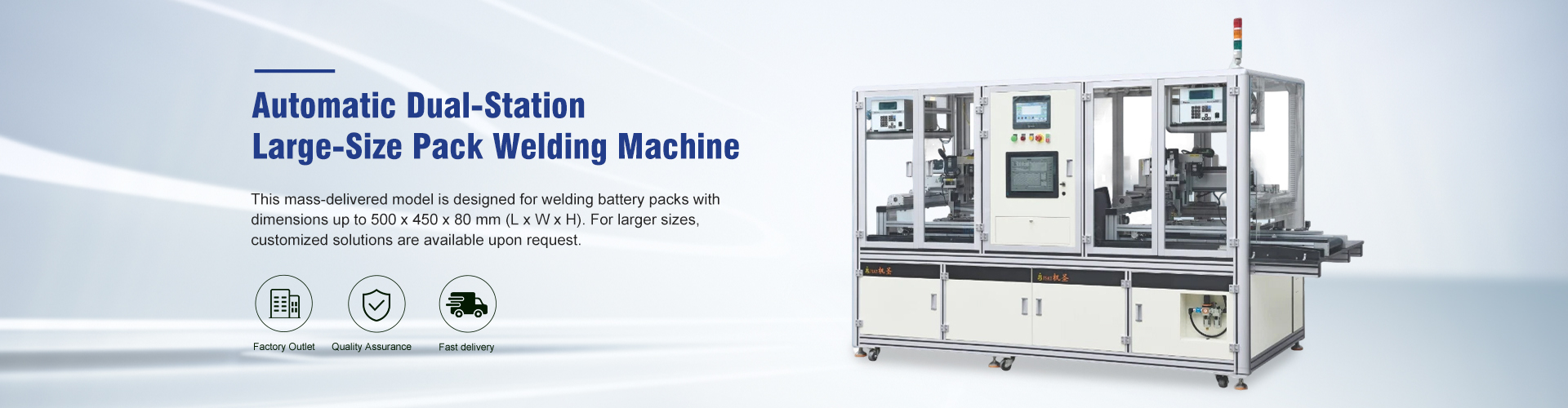
Against the backdrop of the global push for sustainable energy development, lithium batteries, as a key energy storage component in the new energy field, have a wide range of applications, covering electric vehicles, portable electronic devices, and more. Automated spot welding equipment for lithium batteries, as a core piece of equipment in the lithium battery production process, plays a decisive role in battery performance, safety, and production efficiency.This article introduces the application of the American HF2 welding machine used in the large battery pack dual-station automated spot welding equipment customized by Jisheng Automation for its clients, and the significant advantages it brings.
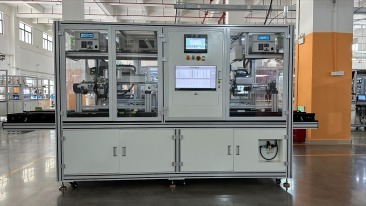
Real photos taken at the Jisheng workshop
I. Working Principle of Lithium Battery Spot Welding EquipmentAutomated spot welding equipment for lithium batteries mainly operates based on the principle of resistance welding. Resistance welding is a method of assembling workpieces together by applying pressure through electrodes and utilizing the resistance heat generated by the flow of current through the contact surface and adjacent joint areas to weld. During spot welding, two electrode heads tightly press the parts to be welded (such as nickel sheets and lithium battery electrode sheets or cells) together, and a powerful current flows instantaneously through the contact point.This process has extremely high time requirements; typically, a single weld point can be completed in just a few milliseconds. This equipment can adapt to welding materials of different thicknesses and materials, as well as various complex welding requirements, by precisely adjusting parameters such as current intensity, welding time, electrode pressure, electrode shape, and size.For example, when welding lithium battery electrodes, the electrodes are usually very thin and highly sensitive to heat input. Therefore, it is essential to precisely control the current and welding time to prevent overheating that could damage the electrodes or degrade battery performance. Furthermore, the welding process parameters differ for different types of lithium batteries, such as cylindrical 18650 cells, prismatic cells, or pouch cells. Automatic spot welding equipment can quickly switch and adjust parameters according to preset programs, thereby ensuring the stability of welding quality.
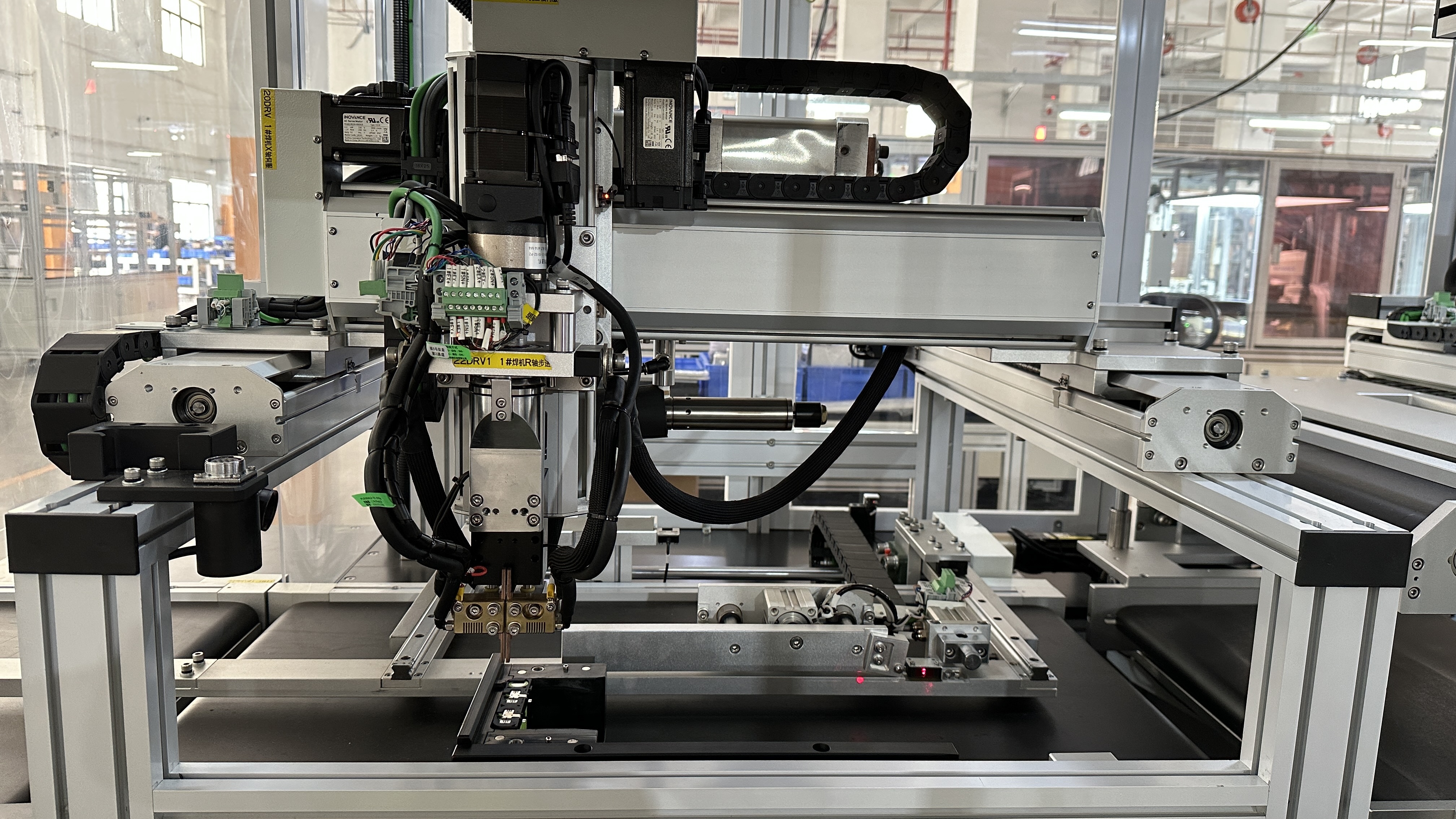
Spot Welding Head System
II. Components of a Lithium Battery Spot Welding Machine(1) Spot Welding Head SystemThe spot welding head is the core driving component of the spot welding machine, acting directly on the welding area. It typically consists of components such as electrodes and electrode clamps. The electrodes are the components that directly contact the welding material, and their material is generally a copper alloy with good electrical and thermal conductivity to ensure efficient current transmission and heat dissipation. A vertical downward pressure spot welding method is adopted, using a welding needle with adjustable downward pressure to ensure stable and reliable welding.(2) Control SystemThe control system is the "brain" of the automatic lithium battery spot welding equipment, responsible for coordinating and controlling the entire welding process. It mainly consists of a microcomputer, a programmable logic controller (PLC), and various sensors. Based on the various welding parameters input by the operator through the equipment's human-machine interface, the control system precisely controls the power supply system to output appropriate current and controls the transmission system to drive the spot welding head for precise positioning and welding operations. Various sensors monitor various physical quantities during the welding process in real time; for example, current sensors monitor the welding current, pressure sensors monitor electrode pressure, and temperature sensors monitor weld temperature. Once the sensors detect that the actual parameters deviate from the preset values, the control system will immediately adjust to ensure the stability of the welding process and the reliability of the welding quality.(3) Power Supply SystemThe power supply system provides the necessary powerful electrical energy for the spot welding process. In terms of equipment configuration, the American HF2 welding machine is selected as the power supply. Its high-frequency inverter technology can convert ordinary AC power into 2kHz high-frequency AC power, concentrating heat highly in the welding area. When welding square battery tabs and connecting plates, it effectively avoids heat diffusion damage to the battery's internal structure. Simultaneously, its high-speed digital adaptive feedback system can adjust welding parameters deviating from preset values within 250 microseconds, ensuring highly consistent quality at each weld point. Welding speeds can reach 1 second per point, and overheating does not occur even during prolonged operation.In the production of small lithium batteries for portable electronic devices, many customers primarily use 18650 cylindrical cells. These cells are small in size and have a precise structure, requiring extremely high welding precision. The adjustable welding energy limiting function of the HF2 welding machine we selected for our customers plays a crucial role in production. It can precisely set the upper limit of welding energy according to the characteristics of the 18650 cells, ensuring weld strength while completely avoiding thermal damage to the cells caused by excessive energy. Furthermore, its electrode life is more than five times that of traditional spot welding equipment, significantly reducing downtime due to electrode replacement and improving customers' continuous production capabilities. After customers started using equipment equipped with HF2 welding machines, the quality stability of small lithium battery products significantly improved, and production efficiency increased by more than 30%, better meeting the market demand for high-quality small lithium batteries.
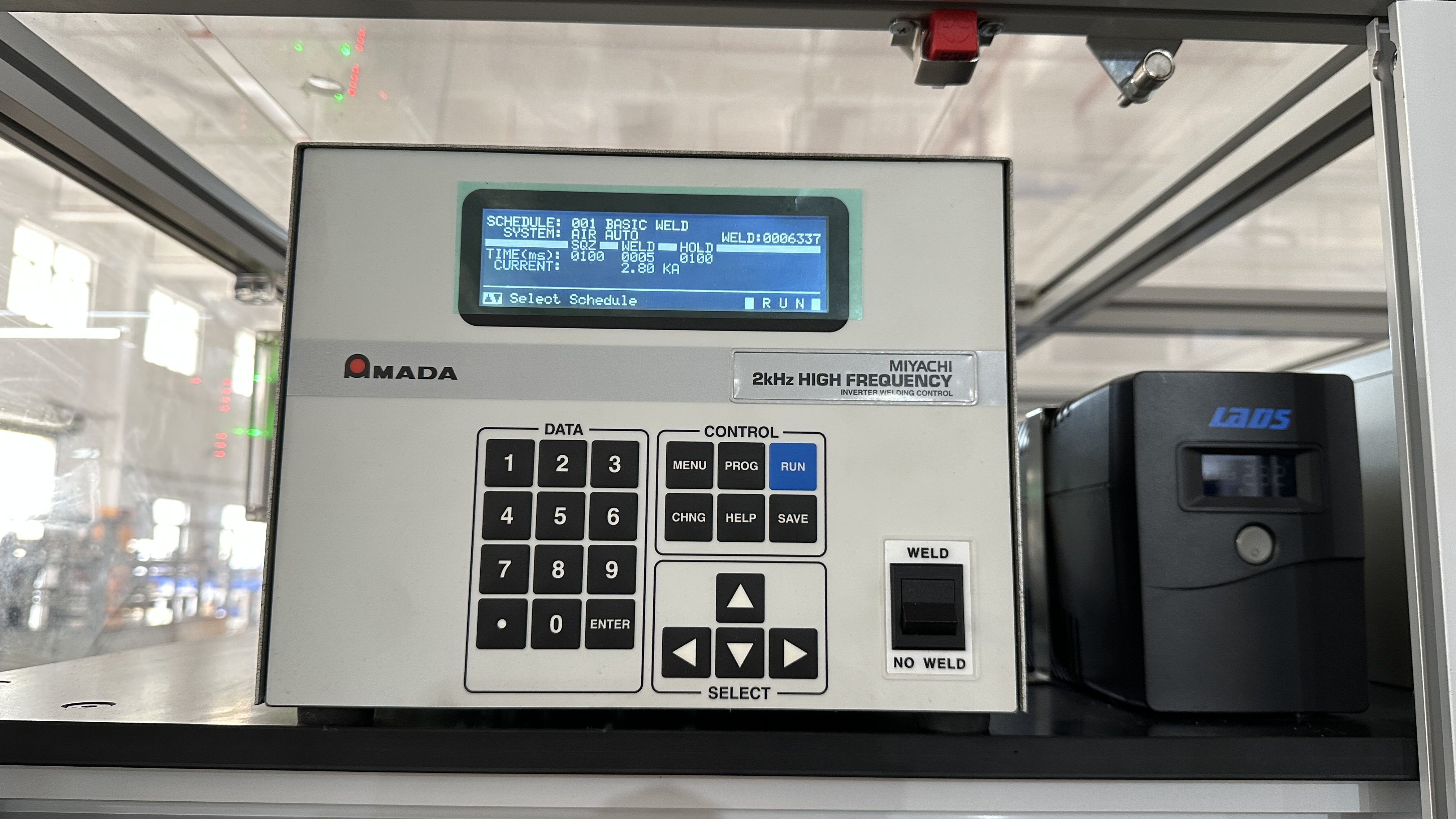
HF2 Welding Power Supply
(4) Transmission SystemThe transmission system is responsible for controlling the movement of the spot welding head to achieve precise control of the welding position. It is usually composed of a motor, transmission devices (such as lead screws, guide rails, belts, etc.), and a motion controller. The motor, as the power source, provides precise driving force according to the instructions of the control system, driving the spot welding head to move in three-dimensional space. The transmission device converts the rotational motion of the motor into the linear motion of the spot welding head, ensuring the accuracy and stability of the motion.III. Advantages of Automatic Spot Welding Equipment for Lithium Batteries(1) High Precision and High StabilityThe automatic spot welding equipment for lithium batteries adopts an advanced control system and a precise mechanical structure, which can achieve extremely high welding precision. For example, the welding precision can reach ±0.01mm, and the repeatability error is less than 0.5%. This is crucial for lithium battery production, as the electrode plates and connecting pieces of lithium batteries are typically very thin, and the position and quality of the solder joints directly affect the battery's performance and safety. High-precision welding ensures uniform and strong solder joints, reducing defects such as incomplete or incorrect soldering, thereby improving the consistency and reliability of the battery pack. Simultaneously, the stability of the equipment is greatly enhanced. During long-term continuous production, stable welding parameters and quality can be maintained, reducing product quality problems caused by equipment fluctuations and improving production efficiency and product qualification rate.(2) High Efficiency and Energy SavingAutomatic spot welding equipment employs advanced power supply technology and optimized welding processes, achieving significant energy-saving effects. For example, the power factor of a capacitor-type energy storage spot welding machine can reach over 0.9, reducing instantaneous power consumption by approximately 40% compared to traditional welding equipment. While improving energy utilization efficiency, the welding speed of the equipment is also significantly increased. The high welding speed not only meets the needs of large-scale production but also shortens the production cycle, reduces production costs, and enhances the company's market competitiveness.(3) Intelligentization and AutomationWith continuous technological advancements, automatic spot welding equipment for lithium batteries is becoming increasingly intelligent and automated. This equipment is equipped with an intelligent control system that can automatically set, store, and recall welding parameters. Operators only need to input the product model or welding task number through the human-machine interface, and the equipment will automatically load the corresponding welding parameters, greatly improving operational convenience and production efficiency. Simultaneously, the equipment also has automatic detection and fault diagnosis functions, enabling real-time monitoring of various parameters and equipment status during the welding process. Once any abnormality is detected, the equipment will immediately stop welding and issue an alarm signal, prompting the operator to handle the situation.Furthermore, on some automated production lines, automatic spot welding equipment can be seamlessly integrated with other automated equipment (such as robots and conveyor belts) to achieve fully automated operation of the entire production process, reducing manual intervention and improving production consistency and stability.
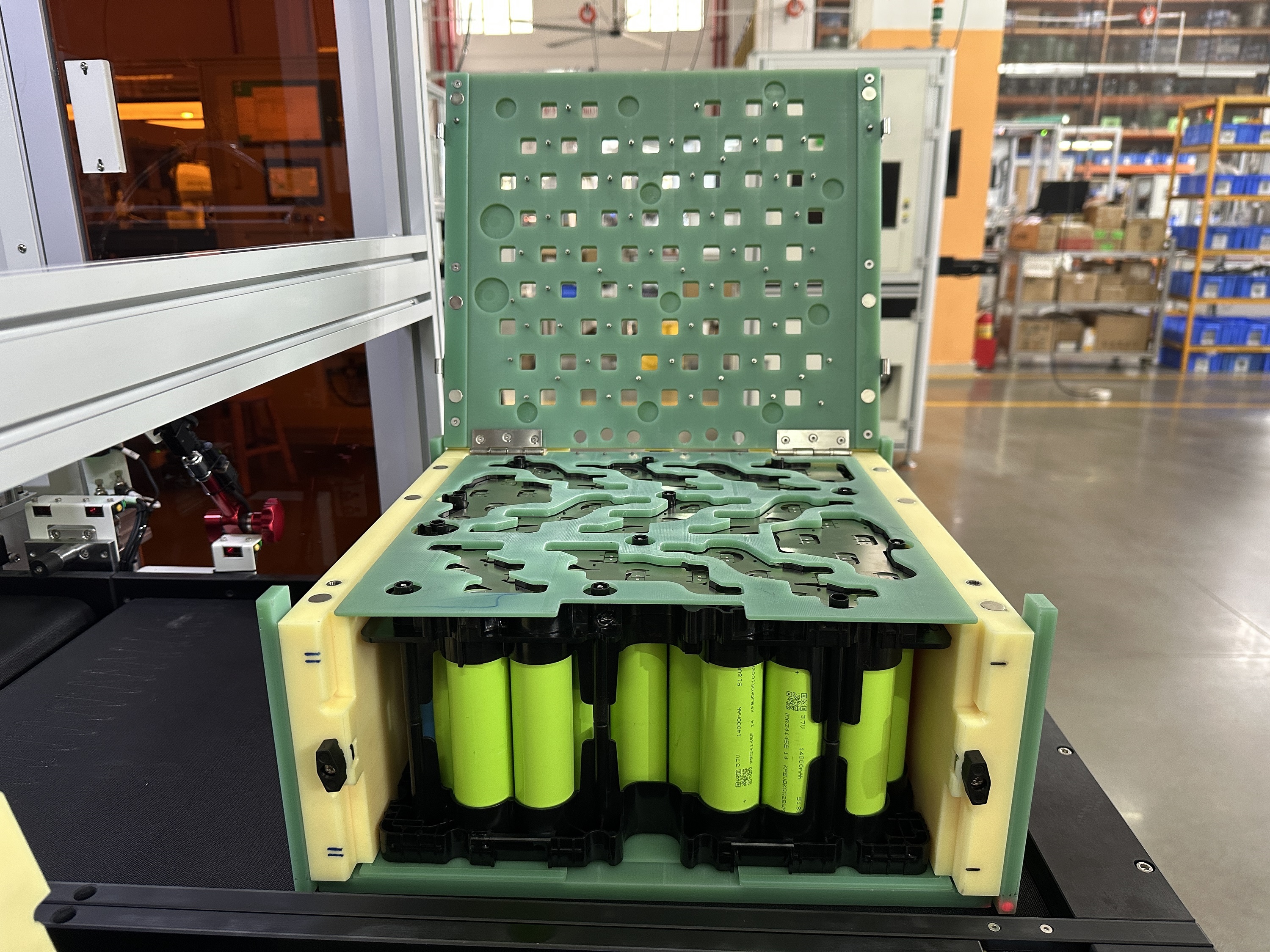
Battery Module
IV. ConclusionAs a core piece of equipment in the lithium battery production process, automatic lithium battery spot welding equipment plays a crucial role in promoting the development of the lithium battery industry due to its precise welding principle based on resistance heating, its multi-system collaborative structure, and its significant advantages such as high precision, high stability, high efficiency, energy saving, intelligence, high degree of automation, and wide applicability. Our company's automated lithium battery spot welding equipment, equipped with the American HF2 welding machine, fully leverages these advantages, bringing significant benefits to our customers' lithium battery production. It not only improves product quality and production efficiency but also enhances our customers' market competitiveness.