High-capacity cylindrical lithium batteries, with their high energy density, high safety, and fast-charging potential, have become one of the important technological routes in the fields of power batteries and energy storage. With the accelerated deployment of automakers such as Tesla and leading battery companies, the global market for high-capacity cylindrical batteries will reach a critical juncture of large-scale expansion in 2026. This article will look at the development prospects in 2026 from the perspectives of market conditions for various sub-types, end-user applications, and equipment upgrades, combined with authoritative data.I. Overall Market Trends: Towards a Turning Point in Scale and CostAccording to forecasts from GGII (Gaoge Energy Storage Industry), global shipments of large cylindrical batteries (mainly referring to series with a diameter ≥32mm) are expected to exceed 450GWh in 2026, and their share of the global battery power market is expected to exceed 30%. The core drivers of this growth are:Technological consensus: The fully limbless (limbless) technology effectively resolves the contradiction between high energy density and high power output in cylindrical batteries, achieving fast charging performance (e.g., charging to 80% in 15 minutes) and cycle life (>1000 cycles), meeting vehicle-grade requirements.
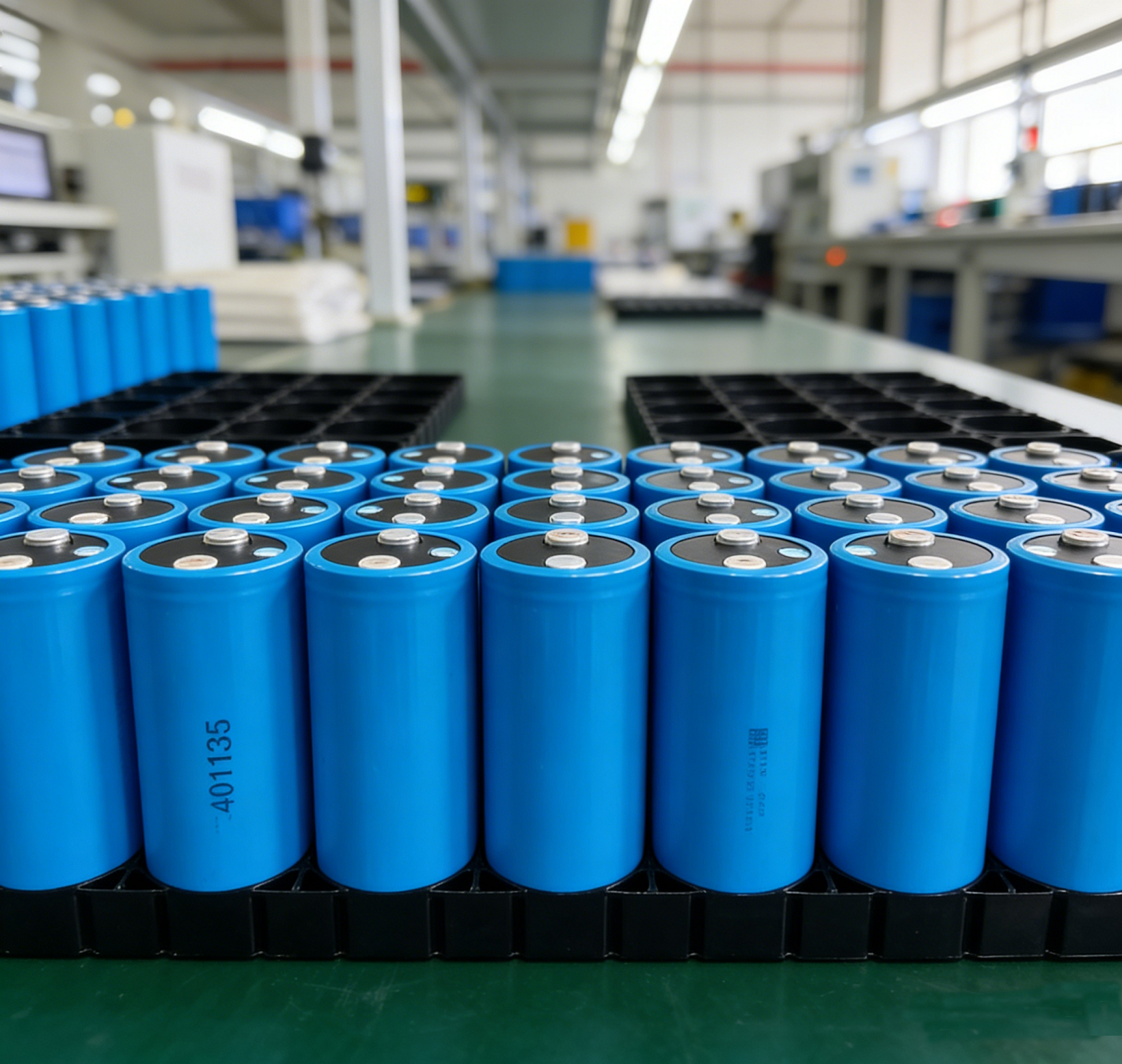
Cost reduction due to economies of scale: With the expansion of Tesla's Texas and Nevada factories, and the release of production capacity from major battery companies such as CATL, BYD Energy, Panasonic, and LG Energy Solutions, the manufacturing cost of large cylindrical batteries will rapidly decrease due to large-scale production. Bloomberg New Energy Finance (BNEF) analysis indicates that by 2026, the manufacturing cost of large cylindrical batteries is expected to decrease by 25%-30% compared to 2023, approaching the cost level of lithium iron phosphate batteries, highlighting their cost advantage.II. Segmented Market Model Analysis1. 32/33 Series: "Pioneering Popularization" in Passenger VehiclesMarket Positioning: Primarily targeting mid-to-high-end electric passenger vehicles, while also considering performance and space utilization. Market Data: According to Tesla's Q4 2023 financial report and Battery Day event, increasing the production capacity of its 4680 (46mm diameter, 80mm height) batteries (belonging to the 46 series, this is the benchmark) is a core focus. The 32/33 series batteries, as derivative or supplementary models, are expected to account for approximately 40% of the global large cylindrical battery capacity by 2026, which has been incorporated into the production capacity plans of major global battery manufacturers.Key Players and Plans: In addition to Tesla's own production, Panasonic plans to increase the 4680 battery production capacity of its Wakayama factory to 200GWh per year by fiscal year 2025. Evelli Energy announced plans to build large-capacity cylindrical battery production lines exceeding 100GWh in Shenyang, Chengdu, and other locations, including a large number of 32/33 series battery production lines. Due to the relatively flexible size of this battery series, it will become the mainstream choice for the Model 3/Y, the next generation of BMW models, and some new Legacy models.2. 40 Series: A Balanced Choice Between Performance and SpaceMarket Positioning: Targeting high-end passenger vehicles, electric pickup trucks, and some commercial vehicles seeking longer battery range and fast charging capabilities.Market Data: The 40 series batteries, represented by the 4695 (46mm diameter, 95mm height), can achieve energy densities exceeding 300Wh/kg. SNE Research predicts that by 2026, the 40 series batteries will account for approximately 35% of the large-size cylindrical battery market.Application Progress: Tesla's Cybertruck pioneered the use of large-size cylindrical batteries. Rivian has also stated it will evaluate the possibility of using large-size cylindrical batteries in its next-generation platform. Domestic automakers such as JAC and NIO have also retained the option of using large-size cylindrical batteries in their respective platform technology roadmaps. The 40 series is one of the key technological routes to address the current "range anxiety" and "charging anxiety" of electric vehicles.3. 60 Series (e.g., 4695/46120): Potential Application Areas for Energy Storage and Heavy-Duty TrucksMarket Positioning: Primarily targeting large-scale energy storage systems (ESS) and heavy-duty electric trucks, ships, etc., where products have extremely high requirements for cycle life, cost, and safety.Market Data: The 60 series batteries have larger single-cell capacity and higher system integration efficiency, giving them a natural advantage in the energy storage field. According to the China Energy Storage Alliance (CNESA), by 2026, the proportion of new energy storage projects in China using large-capacity cylindrical batteries (especially 60 series batteries) is expected to increase from less than 5% currently to 15%-20%.Future Outlook: Currently, this series of products is still in the early stages of market validation and standardization. CATL has announced that its "solid-state battery" technology can be applied to large cylindrical batteries, targeting ultra-high-end markets such as aviation. In the heavy-duty truck sector, companies such as Daimler Trucks are actively exploring the feasibility of large cylindrical batteries. 2026 is projected to be the first year that 60-series batteries achieve commercial breakthroughs in non-vehicle applications.III. End-User Application Distribution: Passenger Vehicles Dominate, Energy Storage Accelerates DevelopmentElectric vehicles (especially passenger cars) will continue to dominate. It is projected that by 2026, over 80% of high-capacity cylindrical batteries will be used in pure electric passenger vehicles. SUVs and pickup trucks, due to their spacious interiors, will be the primary models adopting high-capacity cylindrical batteries (especially 40-series batteries).Energy Storage Systems (ESS): This is the fastest-growing application area. With the deepening of electricity market reforms and renewable energy storage policies, the penetration rate of large cylindrical batteries in industrial and commercial energy storage and large-scale power plant energy storage will increase rapidly. It is projected that by 2026, its application rate will approach 15%.Other Areas: High-end product lines in areas such as power tools and two-wheeled vehicles have begun to trial 32-series products, but the overall proportion remains small. The heavy transportation (trucks, ships) sector is still in the demonstration operation stage.
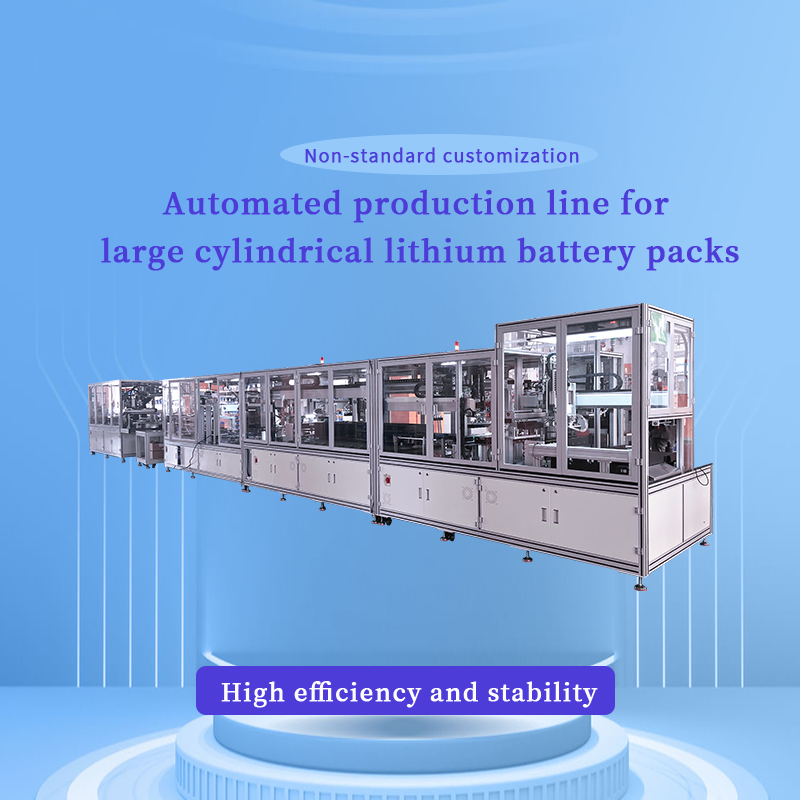
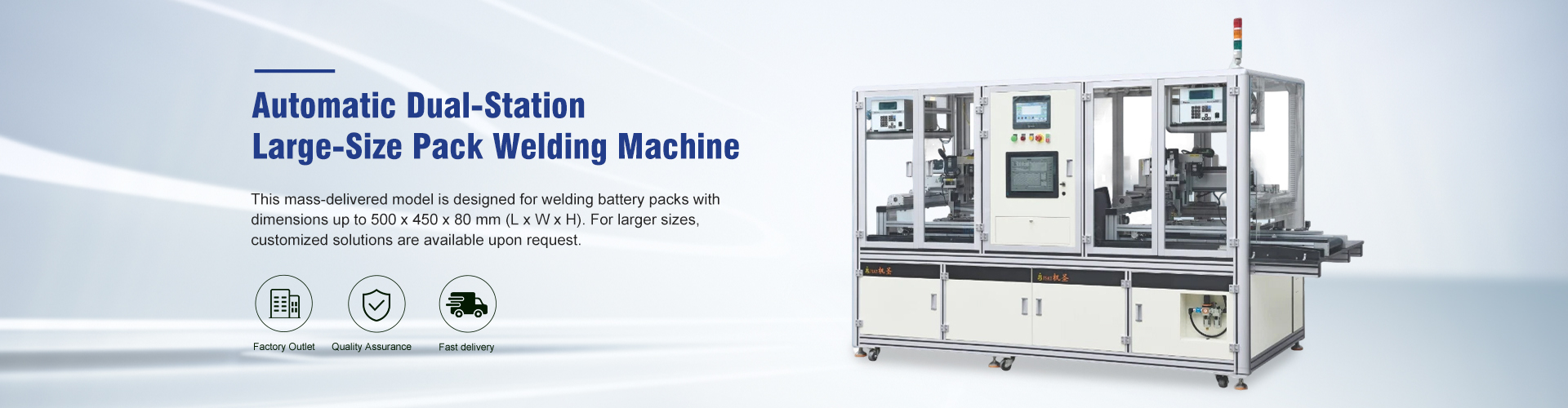
IV. Smart Manufacturing Empowerment: Machine Automation – The Source of an Efficiency Revolution in Large Cylindrical Battery Pack Production LinesThe widespread application of large cylindrical batteries depends not only on the maturity of battery technology but also on the efficiency improvement and cost control of subsequent battery pack manufacturing processes. Traditional battery pack assembly methods face numerous challenges, such as numerous weld seams, high requirements for consistency and yield, and low production efficiency.As the original manufacturer and technology leader of automated production lines for large cylindrical battery packs, Machine Automation deeply understands the industry's pain points. Through the following innovations, it will undoubtedly bring significant cost reductions and efficiency improvements to downstream customers:Breakthrough in Intelligent Welding Technology for All-Taper Structures: For large-capacity cylindrical all-tab structures, Machine Automation has developed an integrated platform combining high-speed laser welding and intelligent quality monitoring. Welding speed is increased by more than 40%, and the welding qualification rate is stabilized at 99.8%. This ensures the reliability and consistency of packaging modules from the outset, significantly reducing rework costs.Modular and Flexible Production Line Design: This production line adopts a highly modular design, which can quickly adapt to different series of battery specifications such as 32, 40, and 60, reducing changeover time by 70%. Flexible production methods meet the market demands of automakers for multi-model, small-batch production, reducing customers' initial investment and the risk of idle capacity.The "production line brain" digital twin system integrates Manufacturing Execution System (MES), digital twin, and AI-powered visual inspection systems, enabling end-to-end data traceability and real-time optimization from cell loading to finished product packaging. Through predictive maintenance and adaptive adjustment of process parameters, overall equipment efficiency (OEE) can be improved by 25%, while reducing operating costs.Integrated efficiency and material cost optimization: Through precise mechanical structure design and integrated processes for thermal management components, the system integration efficiency of battery packs (from cell to battery pack) has been improved to over 85%. Simultaneously, by simplifying structural components, customers can reduce the bill of materials (BOM) cost of battery packs.Conclusion:In 2026, the high-capacity cylindrical lithium-ion battery market will present a clear pattern of "technology diversification, application orientation, and intelligent manufacturing." The 32/33 series batteries will be widely used in the mainstream passenger vehicle market, the 40 series batteries will target the high-performance market, and the 60 series batteries are expected to take off in emerging blue ocean fields such as energy storage. In this crucial process of industry chain upgrading, manufacturers like Jisheng Automation, which focus on underlying process innovation and intelligent equipment, will directly empower battery companies and automakers by providing efficient, flexible, and reliable overall battery pack solutions. They will become an indispensable core force in driving down manufacturing costs, enhancing product competitiveness, and accelerating the commercialization of large-capacity cylindrical batteries. In the second half of the year, the competitive landscape of the large-capacity cylindrical battery market will be a battle for "intelligent manufacturing efficiency."