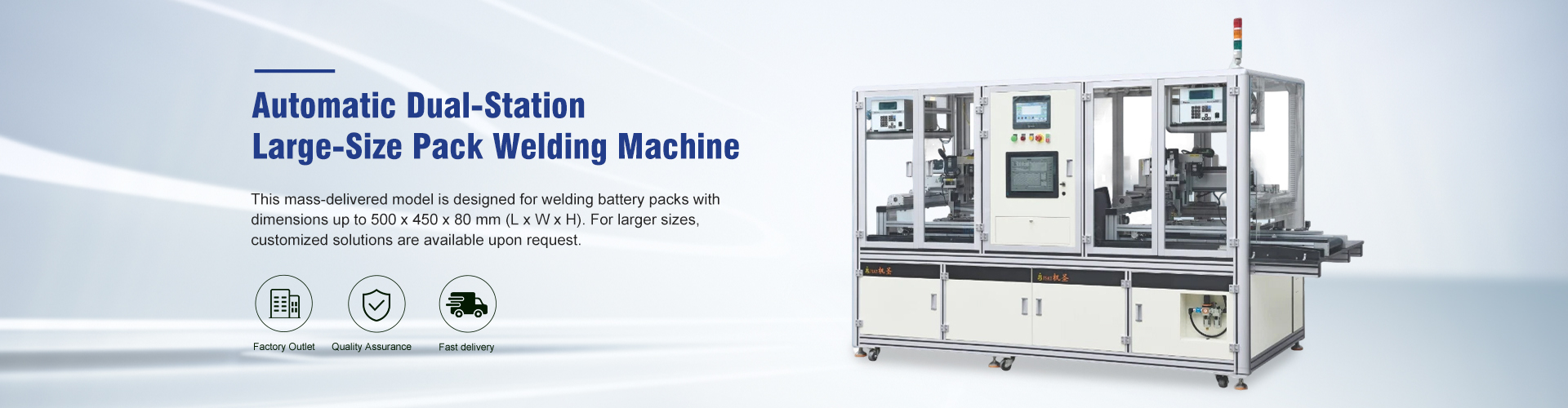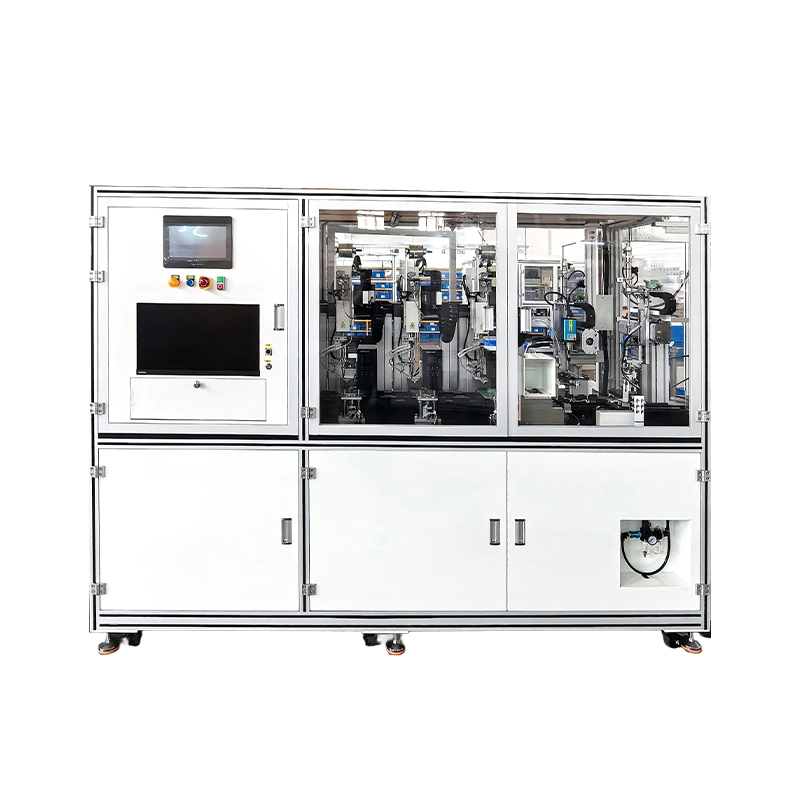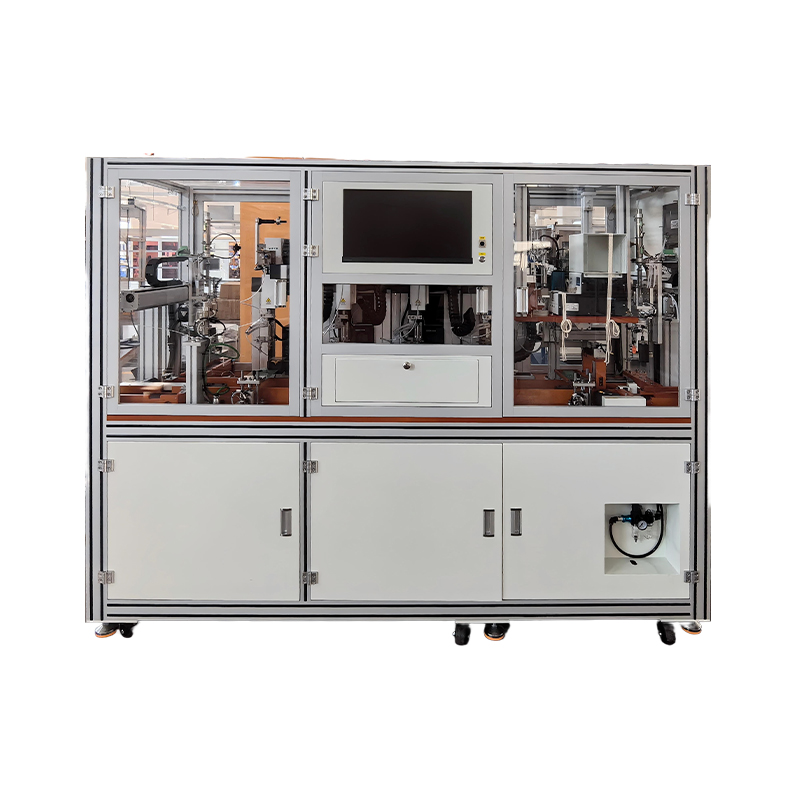
How does an automated BMS soldering and internal battery pack testing machine improve the consistency and reliability of battery pack production through a fully automated welding process?
Publish Time: 2026-06-25
In the field of new energy battery manufacturing, the safety, consistency, and reliability of battery packs are core indicators determining product quality. Among these, the quality of the electrical connection between the BMS (Battery Management System) and the battery pack is particularly critical. Traditional manual welding methods, due to operational differences, parameter fluctuations, and human error, easily lead to unstable weld quality, thus affecting the overall battery pack performance and safety. An automated BMS soldering and internal battery pack testing machine integrates welding and testing through a fully automated welding process, achieving standardization and high consistency in the production process, effectively improving the overall reliability of the battery pack.
1. Standardized Welding Process Eliminates Human Differences
The fully automated welding system precisely controls the welding current, time, pressure, and path through preset, unified process parameters, ensuring that each weld is completed under identical conditions. Compared to the experience differences and lack of stability inherent in manual operation, automated equipment can strictly adhere to standardized processes, maintaining a high degree of consistency in the welding quality of each battery pack, reducing quality fluctuations from the source.
2. High-Precision Control Enhances Welding Stability
Automated BMS welding equipment is typically equipped with a high-precision motion control system and servo drive mechanism, enabling micron-level positioning and stable welding trajectory control. During welding, the equipment can adjust welding parameters in real time to ensure consistent weld penetration, connection area, and conductivity, thereby improving the stability and reliability of the overall electrical connection.
3. Integrated Welding and Testing Ensures a Closed-Loop Quality Control
This equipment not only handles the welding process but also integrates internal electrical testing functions for the battery pack. After welding, the system automatically detects connection resistance, continuity, and voltage consistency, achieving a closed-loop control mode of "welding as testing." This integrated process can promptly identify defective welds, preventing defects from flowing into subsequent processes and improving overall product yield.
4. Data-Driven Management Enhances Consistency Control
The automated system is equipped with a test database and data recording function, enabling complete recording and traceability of welding parameters and test results for each battery pack. Through data analysis, welding process parameters can be continuously optimized, bringing the production process closer to its optimal state. This data-driven approach significantly improves consistency control capabilities in mass production.
5. Stable Processes Reduce Quality Fluctuations and Rework Rates
In traditional production models, welding defects caused by human factors often require rework or scrap, increasing production costs. Fully automated welding processes, through stable equipment control and standardized operations, effectively reduce the incidence of welding defects, ensuring stable electrical performance for each battery pack, thereby reducing rework and improving overall production efficiency.
6. Unmanned Production Enhances Reliability and Efficiency
Automated BMS soldering and internal battery pack testing machines support unattended operation, achieving continuous production through automatic loading and unloading, automatic welding, and automatic testing. This highly automated mode not only reduces the uncertainty caused by human intervention but also improves production cycle time and equipment operational stability, making product quality more reliable.
7. Flexible Production Capabilities Adaptable to Multiple Battery Pack Models
In the new energy industry, different battery packs have significantly different structures and specifications. Automated welding systems, through adjustable welding parameters and flexible programming capabilities, can quickly adapt to different product requirements. While ensuring standardization and consistency, it enables efficient switching between multiple product models, further improving the overall reliability of the production line.
The automated BMS soldering and internal battery pack testing machine combines standardized process control, high-precision execution systems, integrated welding and testing, and data-driven management through a fully automated welding process, significantly improving the consistency and reliability of battery pack production. This technology not only reduces human error and quality fluctuations but also builds an efficient, stable, and traceable intelligent manufacturing system, providing crucial support for the high-quality development of the new energy battery industry.